
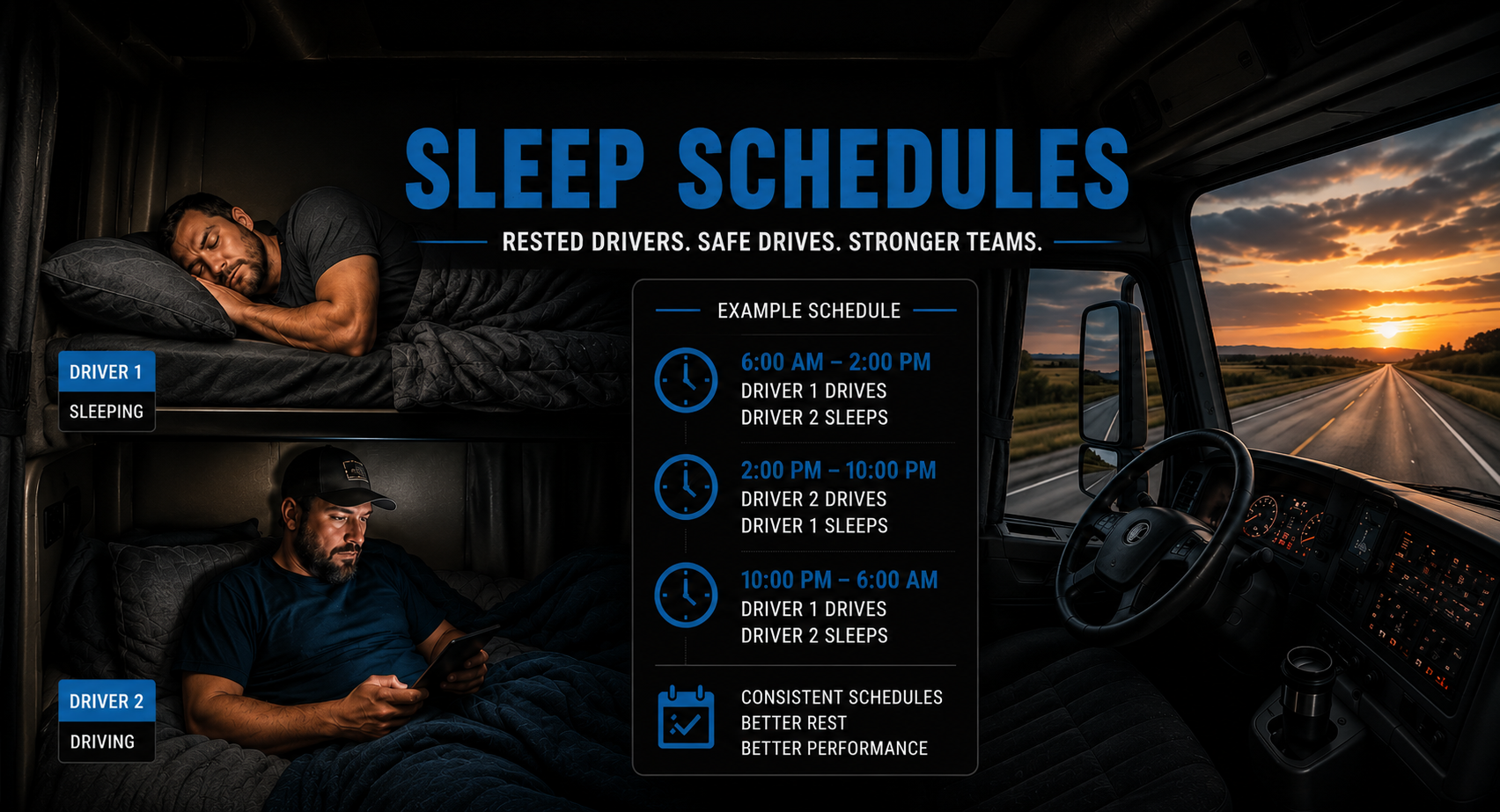
Team Driving Sleep Schedules
Sleep is one of the most important — and most underestimated — parts of successful team driving.
A strong sleep schedule can improve:
- safety
- mood
- reaction time
- communication
- stress levels
- productivity
- long-term health
A bad sleep schedule can quietly destroy all of those things.
Many new team drivers focus heavily on miles and money while completely underestimating how difficult it can be to sleep properly in a moving truck. But over time, poor sleep habits can lead to exhaustion, frustration, poor decision-making, relationship tension between teammates, and serious safety risks.
The reality is simple:
A tired driver is not just an uncomfortable driver. A tired driver can become a dangerous driver.
For team operations to work long term, sleep has to become a priority — not an afterthought.
Why Sleep Matters So Much in Team Driving
In most team-driving setups, one driver is sleeping while the other is driving.
That means drivers are often trying to rest while dealing with:
- truck vibration
- road noise
- braking
- traffic
- bumps
- engine sounds
- changing temperatures
- inconsistent schedules
Some drivers adapt quickly to this environment. Others struggle heavily.
The problem is that poor sleep affects far more than just energy levels.
Lack of sleep can negatively affect:
- reaction time
- focus
- mood
- memory
- stress management
- communication
- emotional control
- overall safety
Scientific research has repeatedly shown that sleep deprivation can impair decision-making and reaction times in ways similar to alcohol impairment.
That becomes extremely important in trucking, where drivers are operating large commercial vehicles for long hours under constantly changing conditions.
What Sleep Deprivation Can Cause
Many drivers underestimate how serious ongoing sleep deprivation can become.
Poor sleep can contribute to:
- slower reaction times
- increased stress
- irritability
- poor judgment
- emotional instability
- fatigue
- burnout
- reduced focus
- health problems over time
In team driving specifically, sleep deprivation can also create:
- more arguments
- communication problems
- impatience
- tension between teammates
- unsafe driving situations
A lot of “personality conflicts” inside team trucks are actually exhaustion problems disguised as personality problems. While some sleep challenges can be solved through better routines and communication, ongoing conflict may sometimes indicate deeper compatibility issues. Learning the Signs Your Co-Driver Is a Bad Fit can help drivers recognize potential problems before they damage the partnership.
The Importance of Consistent Sleep Schedules
One of the biggest mistakes team drivers make is constantly changing sleep routines.
The body usually performs better with consistency.
Drivers who constantly rotate schedules, stay awake too long, or randomly change sleep timing often struggle much more with:
- fatigue
- stress
- sleep quality
- mental focus
Strong team operations usually develop structured sleep routines that both drivers understand and respect. Many team-driving problems do not start with major disagreements. They begin with small frustrations that were never discussed properly. Understanding Why Communication Matters in Team Driving can help drivers prevent misunderstandings before they become major conflicts.
That includes:
- consistent driving shifts
- predictable sleep windows
- respecting quiet time
- minimizing unnecessary interruptions
The more consistent the schedule becomes, the easier it often is for the body to adjust.
Night Driving vs Day Driving
Most team operations naturally involve one driver handling more nighttime driving while the other handles more daytime driving.
Both schedules come with challenges.
Night Driving Challenges
- fighting natural sleep cycles
- reduced visibility
- increased fatigue risk
- difficulty staying alert during early morning hours
Daytime Sleeping Challenges
- sunlight
- truck stop noise
- interruptions
- warmer temperatures
- difficulty fully relaxing
This is why creating the best possible sleep environment inside the truck matters so much. Small sleep improvements can make a major difference during long periods on the road. Many team drivers use high-quality earplugs to reduce road noise, truck sounds, and other distractions while trying to rest in the sleeper berth.
Recommended Product: Mack’s Ultra Soft Foam Earplugs
A Good Mattress Matters More Than People Realize
A lot of drivers underestimate how important a quality mattress becomes during long stretches on the road.
In team driving, the sleeper berth is not just a place for occasional rest. It becomes your recovery space.
A poor mattress can contribute to:
- poor sleep quality
- back pain
- soreness
- stiffness
- restless sleep
- long-term fatigue
Drivers who invest in better sleep setups often notice major improvements in:
- recovery
- energy levels
- comfort
- stress management
Good sleep is not a luxury in trucking. It is part of maintaining performance and safety.
Blackout Curtains Can Make a Huge Difference
One of the biggest challenges in team driving is sleeping during daylight hours.
Sunlight can make quality daytime sleep much harder, especially when trying to recover after long driving shifts.
Blackout curtains can help:
- reduce light exposure
- improve sleep quality
- create a darker sleep environment
- support deeper rest during daytime hours
Many experienced team drivers consider blackout curtains one of the best sleeper berth upgrades for improving daytime sleep consistency.
Other Tips That Help Team Drivers Sleep Better
Small adjustments can make a major difference over time.
Some helpful sleep-improvement habits include:
- using earplugs or white noise
- keeping a consistent sleep schedule
- limiting caffeine too close to sleep time
- keeping the sleeper berth cooler
- reducing unnecessary phone or video noise
- using comfortable bedding and pillows
- minimizing interruptions during sleep shifts
The best teams usually respect each other’s sleep seriously because both drivers depend on each other staying mentally sharp.
Communication About Sleep Is Important Too
Many team-driving problems start when drivers fail to communicate expectations involving sleep.
Before teaming up, drivers should discuss:
- preferred schedules
- temperature preferences
- noise sensitivity
- nighttime habits
- alarm routines
- driving shift expectations
One driver constantly interrupting the other’s rest can slowly create exhaustion, resentment, and communication problems over time.
Strong sleep communication usually creates a much healthier truck environment overall.
Sleep, Stress, and Long-Term Health
Sleep does not just affect short-term performance. It also affects long-term health.
Chronic sleep deprivation has been linked to:
- higher stress levels
- increased anxiety
- mood instability
- reduced immune function
- weight gain
- cardiovascular problems
- burnout
Truck driving already places stress on the body. Poor sleep only multiplies those problems over time.
Drivers who prioritize recovery and sleep often perform better physically, mentally, and emotionally in the long run.
Final Thoughts
Successful team driving depends on far more than just maximizing miles.
Sleep quality plays a major role in:
- safety
- stress management
- communication
- emotional stability
- long-term health
- overall team compatibility
The strongest teams usually understand that proper rest is not optional. It is part of maintaining a safe, productive, and sustainable operation. Successful team driving requires much more than just good driving ability. Our guide on Best Traits for Team Drivers explores the communication skills, reliability, adaptability, and professional habits that often separate strong teams from struggling partnerships.
Creating a strong sleep setup with:
- a quality mattress
- blackout curtains
- consistent schedules
- respectful communication
- healthy sleep habits
…can make a major difference in both performance and quality of life on the road.
Drivers who take sleep seriously usually give themselves a much better chance at succeeding long term in team driving.
Ready to Find Your
Perfect Driving Partner?
Take our free Team Driver Compatibility Assessment to discover whether you and your potential co-driver are a strong match before hitting the road together.